Showing posts with label world war II. Show all posts

Friday, April 5, 2013

Food Friday: Doris Keeton's Toast Rolls with Ham and Asparagus

I am always looking for a great book to read. Recently I read about the book The Girls of Atomic City: The Untold Story of the Women who Helped Win World War II by Denise Kiernan. This is the story of the women who worked at Oak Ridge, Tennessee on a then secret project. They later learned that they had been working on the Manhattan Project.

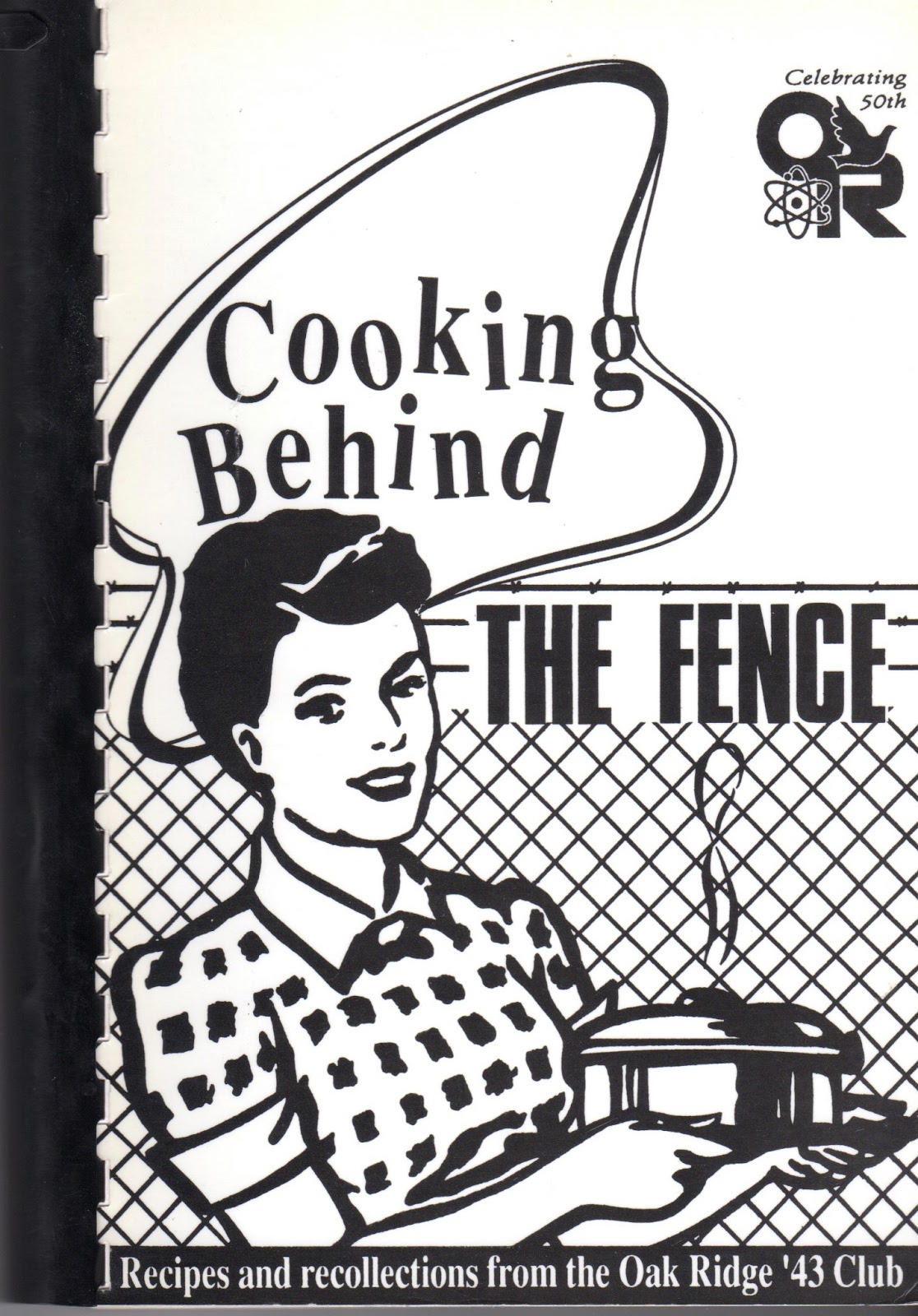
I was interested in this book, besides the interesting topic, because I have a community cookbook written and published by some of the women of Oak Ridge, Tennessee. (To learn more about Oak Ridge and its part in World War II check out the Convention and Visitor's Bureau). You can also check out a previous post I did from this cookbook here.


I love this cookbook, it has everything...  recipes, histories, images, memories, names and family history details. For today's Food Friday I am posting a recipe that's so easy any of us could whip it up as an appetizer but better than the recipe, is the information that accompanies  it.


Friday, April 6, 2012

Food Friday: School Lunch

Do you have fond memories of school lunches? No, not the ones your mom made and you  brought to school in your plain brown bag or themed lunch box. I'm talking about the ones prepared by the lunch ladies and served to you on plastic-molded trays where every food item had its place.

In elementary school I rarely ate in the cafeteria. My mom prepared my lunches and though today I will admit I was lucky she did that for me, as a young child there was a certain allure to the lunch ladies' school lunch. Now in those days the lunch ladies really cooked the lunch. They didn't microwave foods and they didn't heat up the food sent to them. They cooked the lunch.

When my kids were in public school, the school lunch was quite different. The only fresh food was the salad bar. All other foods were bought prepared and  then heated except for the one day a week that the local pizza chain brought in pizza.

I knew the school lunch had gone down hill when a week before school was to go on summer break, all the food that needed to be used up was brought out. This was a child's idea of a feast since the only things they had in abundance were chocolate muffins, doughnuts, and pastries. Oh you could get something from the salad bar, but really what kid is doing that when it's an all sugar menu?

In honor of the 1940 Census, I thought I would post something found in a 1940s cookbook this week. The American Woman's Cookbook had several printings but for those purchasing it during the World War II years you could get The Victory Binding of the American Women's Cookbook, Wartime Edition. Edited by Ruth Berolzheimer.  This edition included "victory substitutes and economical recipes for delicious wartime meals." Being a Wartime Edition, very fittingly it was dedicated to General Douglas MacArthur.


This cookbook also includes menu suggestions. One set of suggestions involves the school lunch. Why not celebrate the 1940 census in a big way and pack one of these lunches for your children or grandchildren?


Friday, October 7, 2011

Food Friday: Tomato Milk

One of my historical food interests is the foods served during World War II. This is an interesting time food wise because people had to not only make due with what they had but they had to do it while  using ration coupons, food substitutes and enduring shortages.

One recipe I have seen in more than one cookbook from this time is for Tomato Milk also named Milk with Tomato Juice. I'm not sure why this ever seemed like a good idea except that it probably allowed one to stretch what little they had.

The recipe is always pretty much the same. It's basically tomato juice, milk and a pinch of salt or sugar (depending on your preference). The following is the recipe from Metropolitan Cook Book issued by the Metropolitan Life Insurance Company. Notice that there is also a recipe for Milk with Fruit Juice. Another cookbook I saw with this Tomato Milk recipe framed it in the idea that it was the perfect snack for children. (My opinion is it is not a good snack for kids unless you want your children running around yelling about how gross it is-for more on this, see below).


I had mentioned this recipe to my mom who voluntered to give a try since she had all the ingrediants handy. Well we just happened to be at my parent's house one day and she said "let's all try it." Well, what was I going to do? I couldn't just say, "hey mom you try it because I'm pretty sure it's really gross." So my mom, my youngest son (he loves to try weird foods) and I bellied up to the kitchen counter where she mixed the recipe using a pinch of salt. (The rest of the men in our family went outside to look at the garden, yeah right).

Now, I like all of the ingredients involved in this recipe. I love tomato juice. I like milk in my cereal and I love a good dose of sugar. This combination of ingredients reminds me of a drink some of the local Vietnamese restaurants have that is basically an avocado smoothie. I like avocados and I like smoothies, just not certain that avocado smoothie is the best idea for me. The same is true for tomato milk.

So why did I try it? Well I honestly wanted to figure out what was so appealing about that combination. I wanted to see if I could imagine serving it to kids as a "wholesome" snack. I wanted to take a drink of a World War II recipe.

So we tried it. The final result? Two of us felt sick to our stomachs the whole night and the third person ran around yelling about how gross it was. I'll let you figure out who was who.

Basically, it did have this creamy/acidic taste that I found pretty heavy. The taste is probably one you could imagine.

When I asked my Facebook friends if anyone had ever drank this, I didn't have anybody admitting to it but they did name off recipes that were similar ingredients-wise  including a tomato gravy that includes milk.


The moral of this tale is that you should always be cautious when trying the foods of your ancestors. At least don't make plans for later in the day if your going to try something unusual. But it should also give you an appreciation of what they might have ate out of duty.

Friday, September 3, 2010

What Did Your Family Eat During World War II?

World War II ushered in an era of necessity that changed the way Americans, and those in other nations, ate. This era included such experiences as food rationing, victory gardens and introductions to different types of food. All families would have been affected as their choices at the grocery store were diminished and women were encouraged to make substitutions for well known favorites and to make what they did have last longer.

Rationing

Not just food was rationed during the war years. I remember a story from my own family history about a great-great grandmother who passed away; no family members went to her funeral because gas was rationed and they lived too far away. Rationing affected more than just what food you could buy and how much gas you could purchase it affected your access to some durable goods.

So what food was rationed? Sugar, meat, coffee, processed foods, cheese, canned milk and fats. To see a list of rationed items and the dates they were rationed, check out this website on World War II rationing.

Families were issued ration books with coupons that were used to purchase food. Ration book covers include the name of the person who it was issued to and their address. These books often are a home source that may be archived by a family member and can be used by the genealogist to add interest to your family history. I have also seen these books at antique stores and on eBay. GenealogyToday’s databases include one with 9,800 names from War Ration books. This unique database provides another way to find family members. While these books provide little information, it does place your ancestor in a specific place in time.

We’re Eating What For Dinner???

In some cases, Americans were encouraged to substitute different food stuffs for what was familiar due to rationing or limited quantities. One of my older relatives lived with my family for a time and refused to eat any ground beef. This refusal stemmed from World War II when horse meat was provided as a substitute for beef. Even after more than 45 years, she was convinced the government was slipping horse meat into packages of ground beef.

Other meat substitutes both animal and plant based were also suggested. Tricks to making food last longer were encouraged. Your family may have changed their diet considerably in order to comply with shortages. Patriotic propaganda that came in the form of posters and cookbooks that told women how to shop and what to cook.

Victory Gardens

When you think about it, it makes sense to encourage the masses to plant gardens when food is at a premium. A little self sufficiency makes it possible to spread the wealth so to speak. One way our families were encouraged to help with the war effort was to plant a victory garden. The May 3, 1943 issue of Life magazine (p. 29) includes a pictorial of gardens in all kinds of places in the United States including at a prison. The caption to that picture notes that prisoners aren’t allowed to plant corn, lest it be used to hide from the guards.

So Now What?

What may seem like everyday, ordinary life to older family members can add interest to your family history narrative. Interview older family members about what they ate, how they sacrificed and did without during the war years. If you are that older family member, write down your experiences. History is made up of the experiences of individuals and history is lost when we neglect to tell our stories and our experiences.

Want to learn more about eating during World War II? The book Manly Meals and Mom's Home Cooking: Cookbooks and Gender in Modern America by Jessamyn Neuhaus includes a few chapters on the subject.   Portions of the book are available as a preview on Google Books.

So what did your family eat during World War II?